Beam: the original web UI
Beam was the browser face of Contenox: a React single-page app embedded directly in the contenox binary and served by contenox serve, at 127.0.0.1 by default, reading and writing the same SQLite state as the CLI. Nothing was hosted — one command opened the same sessions, chains, models, and HITL policies you already drove from the terminal, now in a window you could watch. A session sidebar grouped conversations by project; each session carried its own model, HITL policy, reasoning-effort, and token-limit controls, so one tab could run a strict local model while another ran a permissive hosted one, side by side.
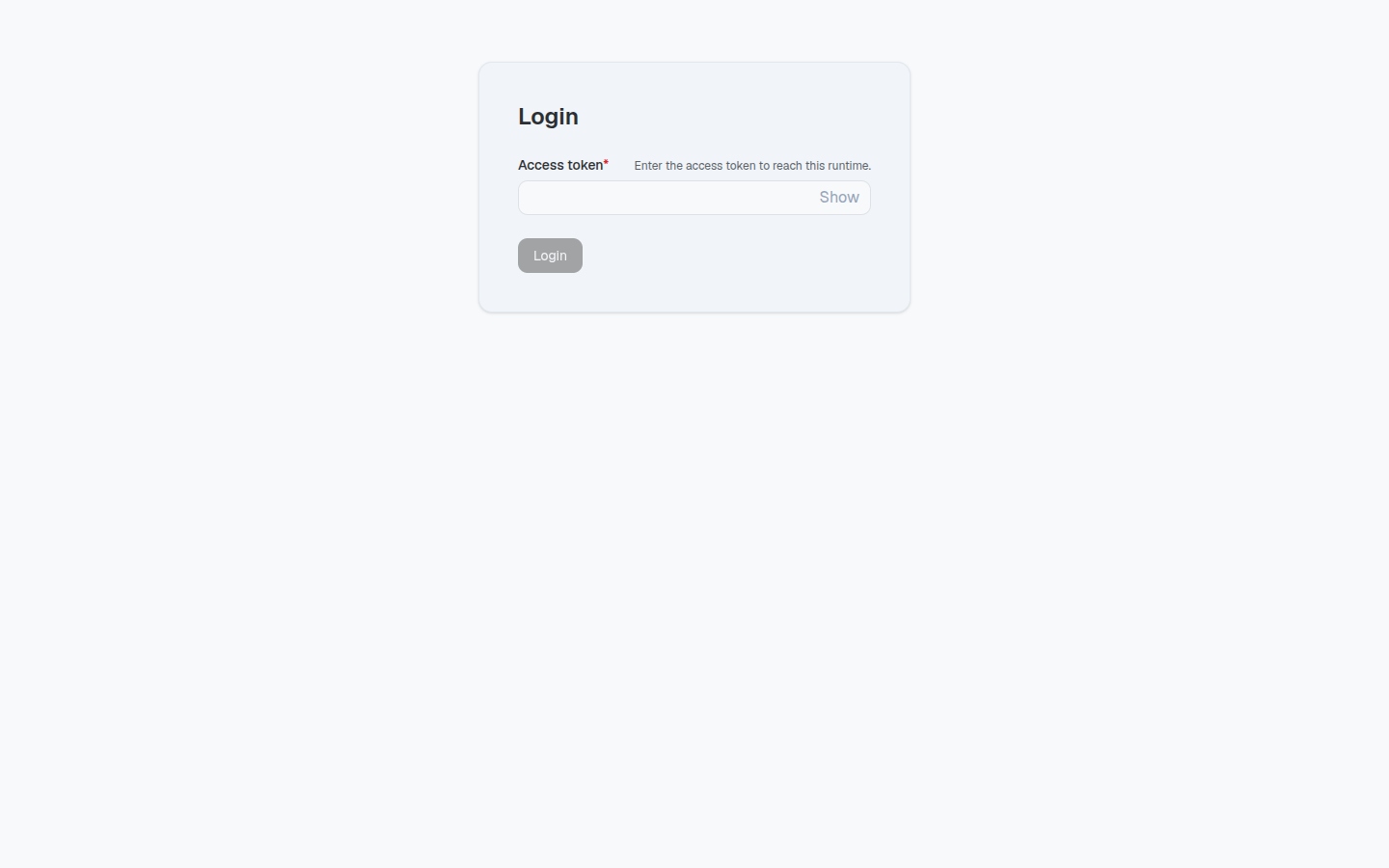
Its centerpiece was the supervise-review-intervene loop made visible: a live workspace file tree showing exactly which files an agent’s policy allowed it to touch, every tool call rendered as its own card, and — before any gated write or shell command ran — an inline diff you approved or rejected in place. A command palette (⌘/Ctrl-K) reached every action without leaving the keyboard. Behind the chat sat a full admin control plane: backends and model registry, a visual chain editor with a dagre-laid-out workflow graph, HITL policy editing, remote MCP/OpenAPI tool registration, and a fleet/mission board for dispatching and watching unattended runs. Authentication was a cookie-based BFF: the browser never touched the bearer token directly, sessions rode an HttpOnly, SameSite=Strict cookie minted from it, and the /acp chat WebSocket enforced the same credential in its handshake before ever upgrading the connection.
A chat with a registered agent in a project workspace: the agent reads the files, a gated write pauses at the inline permission card, one click allows it.
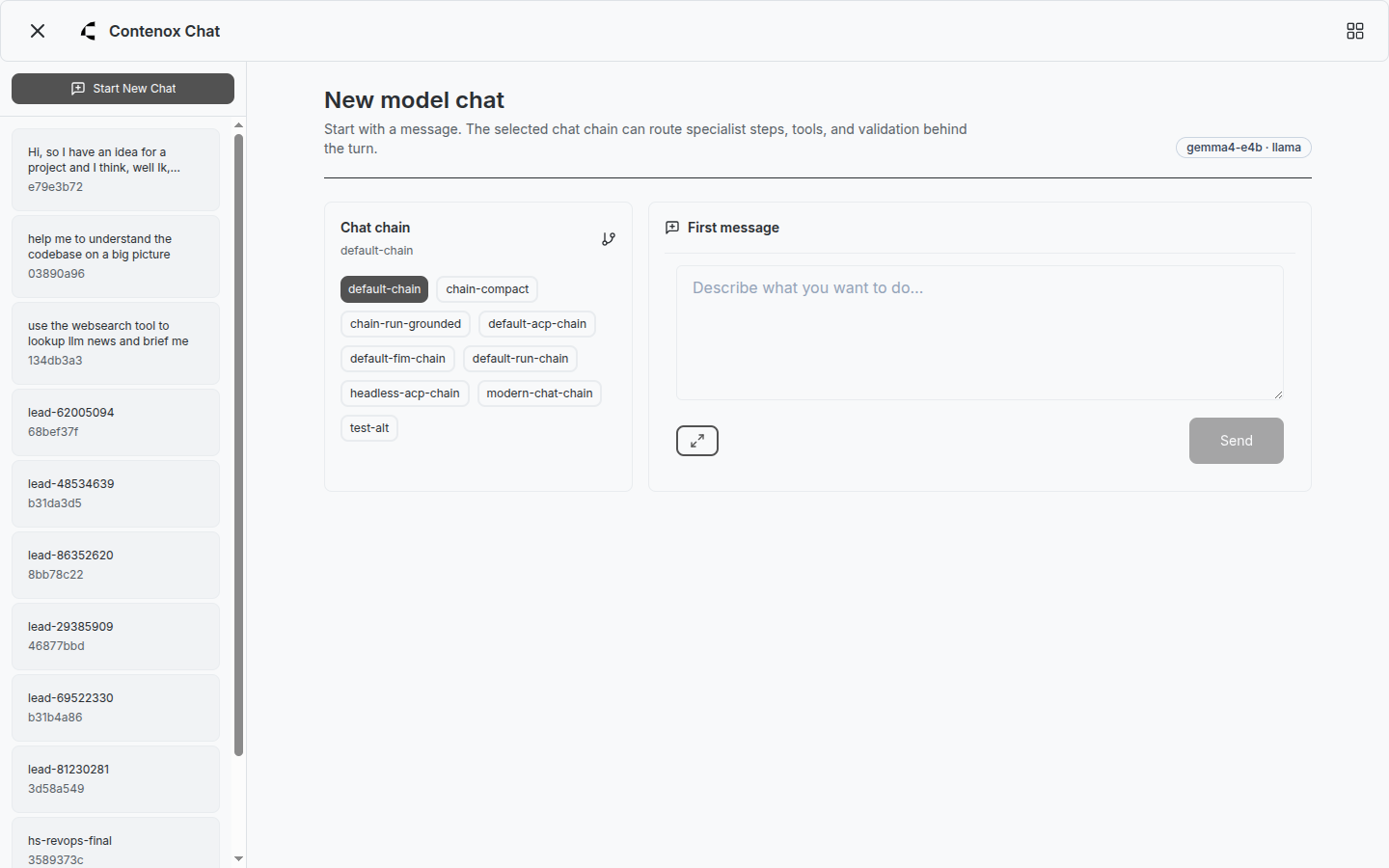
The companion backend manager configured providers, declared models with their capability flags, and wired backends into pools — all from the browser:
What it proved
- A rich admin SPA can ship from one static Go binary with zero hosting. No separate frontend deploy, no API gateway —
contenox servewas the whole stack. - Diff-first, inline approval is the right shape for human-in-the-loop. The approve/reject card pattern proved out here now anchors HITL everywhere else in the runtime.
- Cookie-based BFF auth plus handshake-gated WebSockets is a workable remote-access model for a local-first tool that still needs to leave loopback safely.
- Visual chain editing over a graph layout is legible. The dagre-based workflow visualizer showed that a chain’s branches and retries read better as a graph than as raw JSON.