
Field guide
AI bots vs. coding harnesses: which runs the job?
A bot carries out an assignment. A coding harness is the software that lets a model inspect a project, edit it and check its work. A single product can do both. The difference becomes clear when you decide what you want handed back.
Updated
Imagine that two versions of a tool shipped this week. You want a digest on Friday, and you discover that the script behind it keeps calling version 1.9 newer than 1.10. These are different jobs with different definitions of success.
Job one: tell me what shipped#
Give a bot the feed, a delivery destination, a timezone and a rule for repeats. A good Friday digest includes the new release and its source. Next Friday the bot needs enough memory to avoid sending it again. Its work continues even when there is nothing to report.
To check whether it understands the assignment, try the two sample feeds in the bots guide. The second feed revises an old headline. If the bot compares titles, it sends a duplicate. If it keeps stable release IDs, it can distinguish a correction from a new release.
Job two: fix the program that makes the digest#
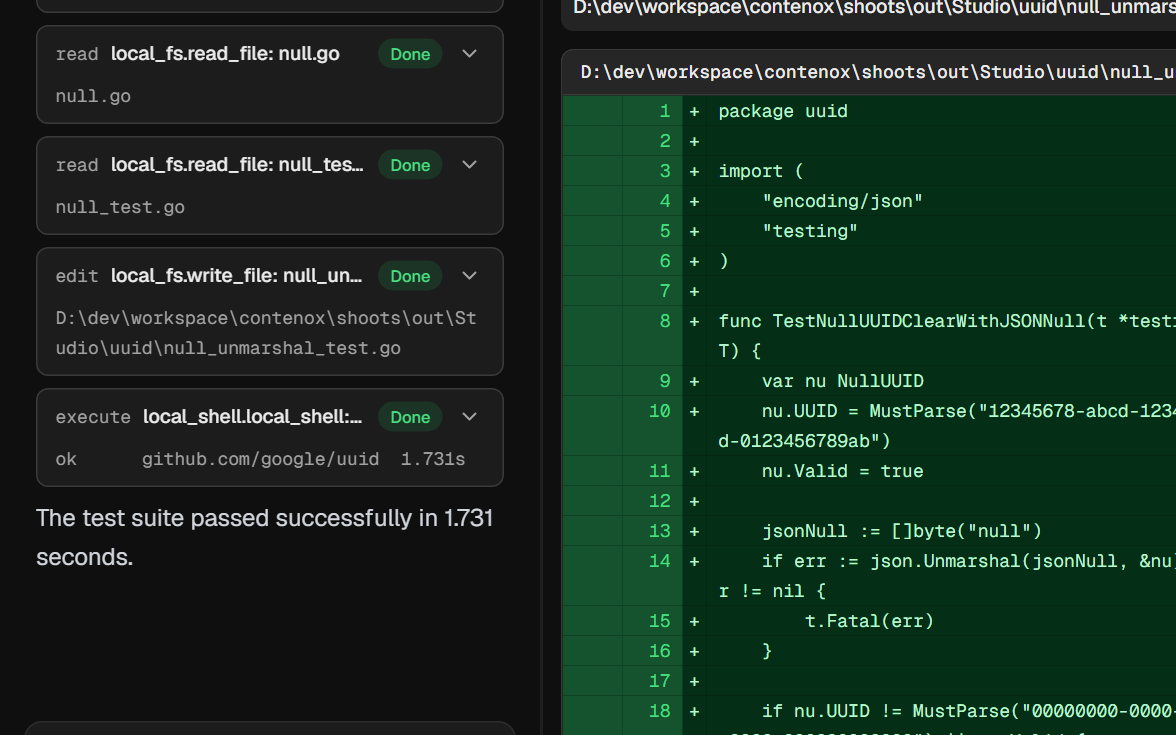
Open the repository in a coding harness. Ask it to reproduce the ordering bug before it edits the code. A small test could require that sorting 1.9 and 1.10 returns 1.10 as the newest release. Text sorting looks at the first differing character; numeric version components put ten after nine.
Find the code that chooses the latest release. Add a failing test for 1.9 and 1.10, fix the comparison using the project’s existing version parser, and show the diff and the test output. Keep the change in the working tree.
Now the deliverable is a test and a patch that someone else can review. Check that the test failed for the original reason and passed after the change. If the project supports pre-releases, follow its existing ordering rules before shipping the fix.
Six questions that separate the two jobs#
| Question | Release-watching bot | Coding harness fixing the watcher |
|---|---|---|
| What starts it? | A scheduled time or a new event. | A task in a repository, or an automation that opens one. |
| What must it remember? | The last successful check and the IDs it already delivered. | The project instructions, working tree and test results. |
| Which access is enough? | Read the feeds and write to one destination. | Read the repository, change the relevant files and run its tests. |
| What happens during sleep? | Depends on the machine that hosts the scheduler. | A local session pauses with its machine; a remote coding job has its own host. |
| What should I inspect? | The original links, delivery time and duplicate handling. | The diff, the commands run and the regression test. |
| How do I stop it? | Disable the schedule and check for pending deliveries. | Stop the session and inspect the working tree before accepting the patch. |
When one tool covers both#
Claude Code supports cloud routines for repository work. A scheduled pull-request review has a bot’s trigger and a coding harness’s tools. Ask where the routine ran and which commit it inspected. Replit Agent can build an automation that you then deploy. The builder’s successful test and tomorrow’s scheduled delivery are separate events.
For a reviewable project change, compare the permission and diff workflows in Claude Code and Contenox Harness. If the job is monitoring, compare OpenClaw and Hermes Agent by where their scheduler lives.
Further reading#
 What is an AI coding harness? Harness vs agent vs modelWhat is an AI coding harness? The program around the model: loop, tools, context, permissions. How it differs from the model, and why it changes the results.
 What are AI bots, and what can you actually leave them to do? · ContenoxChoose between hosted, desktop and self-hosted AI bots. Try a two-run release digest to check memory, scheduling, permissions and delivery.