
Explore
 Guides
Generate release notes with AI from git log, in one command
Generate release notes with AI: pipe git log into Claude Code, Codex CLI or OpenCode, get grouped Markdown back, and run it in CI. Commands, prompt and the traps.
 Guides
How to review AI-written code: what to check, in order
How to review AI-written code: read the diff, not the summary, then check scope, tests, invented APIs and error handling. Git commands and a checklist to copy.
 Guides
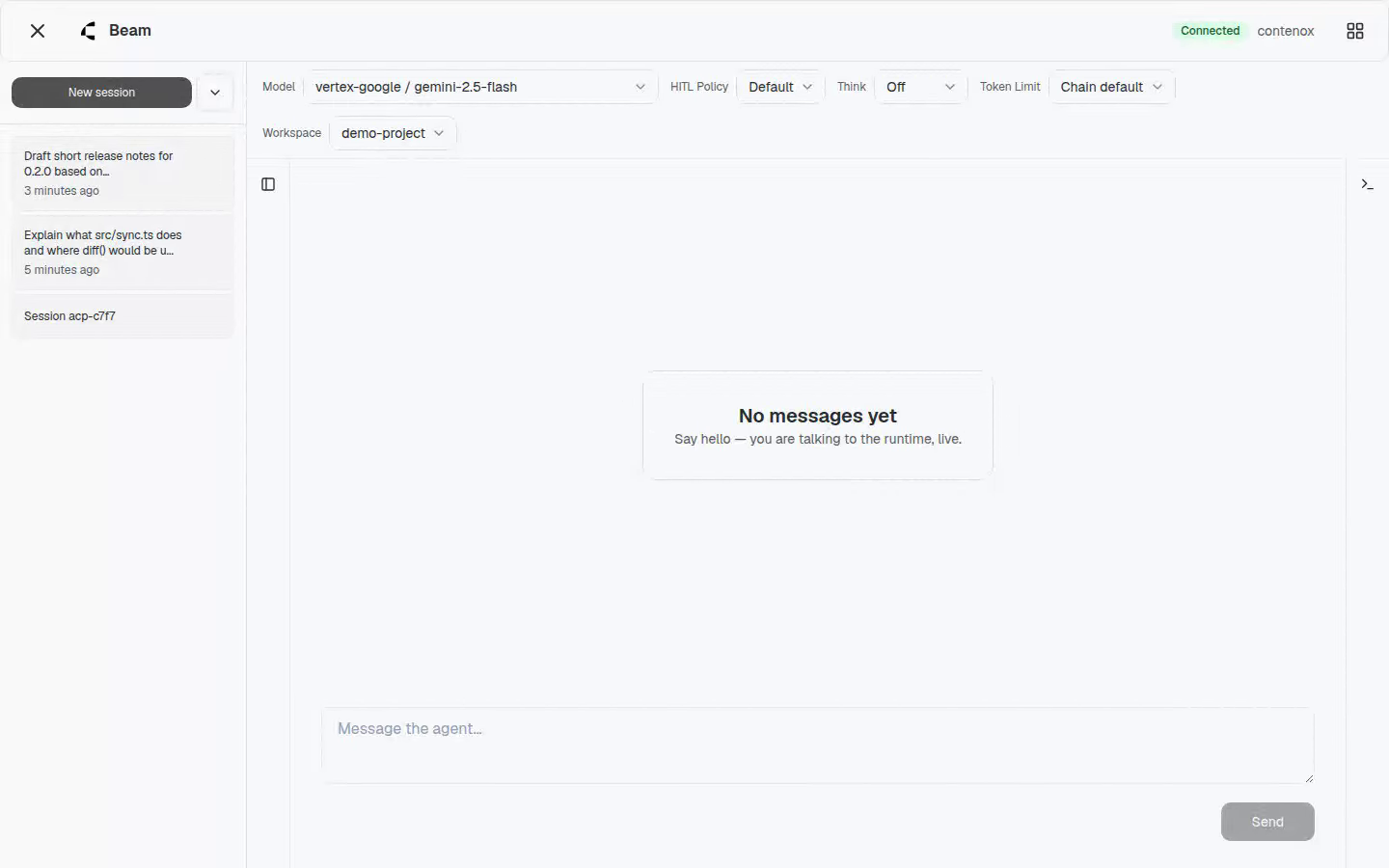
Terminal client for AI agents: built three times, what it taught
A terminal client for AI agents must show the work and ask inline, but never own the rules. What building beam three times taught, and why a terminal is for testing.
 Guides
What are embeddings? Search by meaning, explained with code
What are embeddings? Lists of numbers that capture what a text means, so similar meanings land close together. How they work, a short example, and the traps.
 Guides
What is a vector database? And do you need one?
What is a vector database? A store that finds the embeddings closest to a query, fast. How it works, a pgvector example, the traps, and why you may not need one.
 Guides
What is RAG? Retrieval-augmented generation, with code
What is RAG? Find the passages that answer a question, then let a model answer from them. A 50-line example, the traps, and when long context or search is better.
 Guides
What is the KV cache? How much memory your context needs
What is the KV cache, and why does a long context need so much GPU memory? The formula, worked examples for real coding models, a calculator, and how to shrink it.
 Documentation
Contenox permissions and built-in tools: files, shell, git
Contenox permissions explained: what agents may read, change and run without asking, what asks first, what is blocked, and how to change the rules.